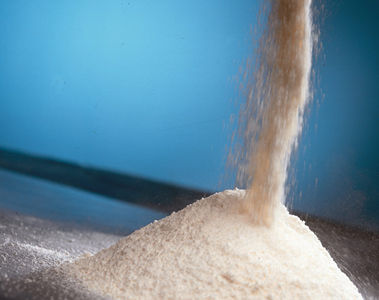
Premix carriers - why do they matter?

When formulating an animal premix, it's easy to focus on the active ingredients. Vitamins, trace minerals, enzymes, probiotics, and specialty additives may be the stars of any premix—but they can only perform as well as the foundation they're built on. That's why one of the most important formulation decisions is also one of the most underestimated: choosing the right carrier.

A carrier is an edible, inert or relatively inactive substance that serves as the principal bulk component of a premix. Its role is to dilute, disperse and convey active ingredients so they can be mixed uniformly, handled efficiently and delivered accurately in the final feed. In many premixes, the carrier represents the largest proportion of the formulation, meaning its impact on product quality should never be underestimated.

More than just a filler:

The carrier is not simply a filler used to increase volume. It plays a critical role in determining whether a premix remains stable, free-flowing and homogeneous throughout manufacturing, storage and transport.

An effective carrier helps to:

  • Dilute low-inclusion ingredients to manageable concentrations
  • Improve mixing uniformity
  • Reduce segregation during handling and transport
  • Protect sensitive nutrients from degradation
  • Support accurate dosing in feed manufacture
  • Improve flowability and processing efficiency

Without the correct carrier, even the highest-quality ingredients may fail to deliver their intended nutritional value.

What makes a good carrier?

Selecting the right carrier is always a balance between the properties of the active ingredients, the manufacturing process and the requirements of the final product. While no single carrier is perfect for every application, an ideal carrier should possess several key characteristics.

Compatibility with Active Ingredients

The carrier should be chemically compatible with vitamins, minerals, enzymes, probiotics and other active components.

Factors to consider include:

  • pH
  • Moisture content
  • Oxidation potential
  • Interactions with active ingredients

For example, vitamin stability can be strongly influenced by premix pH. The ideal target pH for maximum vitamin stability is typically between 4.5 and 5.5, although a range of 4.0 to 6.0 is generally acceptable. As pH increases above 6.5, vitamin degradation and oxidation-related losses may increase.

Typical pH ranges include:

  • Wheat middlings: 5.5 to 6.5
  • Rice hulls: 6.5 to 8.0
  • Calcium carbonate (limestone): 8.5 to 10.0

Understanding these characteristics is essential when formulating vitamin-containing premixes. Recent stability studies suggest Vitamin A may be more sensitive to organic carriers while B-vitamins are more sensitive to the presence of calcium carbonate. Choosing the correct carrier or combination of carriers can impact the stability and shelf-life of a premix. 

Figure 1: Stability of Vitamin A in VIT premixes with 100% calcium carbonate (OR:100C), 100% rice hulls (100R:OC), 33% rice hulls and 66% calium carbonate (33R:66C), or 66% rice hulls and 33% calcium carbonate (66R:33C) stored at 25°C, -60% RH for twelve months

Particle Size and Bulk Density

Particle size is one of the most important physical properties of a carrier. Selecting a carrier with appropriate particle size ensures microingredients are evenly distributed throughout the premix.

When carrier particle size closely matches that of the active ingredients and final feed, it helps:

  • Improve homogeneity
  • Reduce segregation
  • Ensure consistent nutrient delivery

Similarly, bulk density should be compatible with the other ingredients in the blend. Large differences in density can result in heavier particles settling and lighter particles rising, reducing uniformity throughout the product.

Figure 2: Vitamin ADE blend on calcium carbonate versus wheat middlings carrier

Figure 3: Comparison of particle size distribution of common carriers versus vitamin product forms.

Carriers such as calcium carbonate may be sourced in differing particle sizes. A fine granulation may more closely match the vitamin particles, however, due to the high density, it may prohibit even distribution. A coarse granulation may improve flowability but may decrease the homogeneity. A combination of both may help to find the happy medium between homogeneity and mixability. 

Flowability

Good flow properties are essential for efficient premix manufacturing. Poor flowability can lead to:

  • Bridging
  • Funnel flow
  • Caking
  • Inconsistent dosing

A suitable carrier should flow easily through mixers, hoppers and feeding systems, helping to maintain manufacturing efficiency and product consistency.

Figure 4: Types of flow

Moisture and Hygroscopicity  

Many active ingredients are highly sensitive to moisture.

A good carrier should:

  • Have low moisture content
  • Resist moisture uptake
  • Minimize caking
  • Protect moisture-sensitive ingredients

This is particularly important for vitamins, enzymes and probiotics, where excess moisture can significantly reduce shelf life and performance.

Absorption Capacity

Many premixes contain liquid ingredients such as vitamin oils, essential oils, flavors or antioxidants.

The carrier must be capable of absorbing these liquids while maintaining a free-flowing powder. Insufficient absorption capacity can result in sticky, lumpy products that are difficult to handle and dose accurately.

Common Premix Carriers

Several carriers are commonly used in animal nutrition applications:

Calcium Carbonate (Limestone)

  • Widely available
  • Cost effective
  • Good flowability
  • Consistent quality

However, its high alkalinity and density may create challenges in some vitamin premixes.

Calcium Carbonate (Limestone)

Wheat Middlings  

  • Economical
  • Good absorption capacity
  • Moderate pH

Variability in composition and moisture levels should be considered.

Wheat Middlings

Rice Hulls

  • Excellent liquid absorption
  • Low density

Can be dusty and may increase segregation risk if not properly matched with other ingredients.

Rice Hulls

The Bottom Line

Choosing a premix carrier is far more than a cost decision. The right carrier contributes to product stability, uniformity, manufacturing efficiency and ultimately animal performance.

The best choice will always depend on the specific formulation and application. Successful carrier selection requires careful consideration of pH, particle size, density, flowability, absorption capacity and compatibility with active ingredients.

In short, a well-chosen carrier forms the foundation of a successful premix, helping ensure that every nutrient reaches the animal exactly as intended.

Do you experience handling issues with your premixes? See how dsm-firmenich’s ANH Premix Formulation Experts can help. Contact your Account Manager for more details. 

Published on

17 August 2026

Tags

  • Poultry
  • Ruminants
  • Swine
  • Aquaculture
  • Premixes

Related Articles

  • From Testing to Prevention: Building Confidence Through Risk-Based Quality Management

    From Testing to Prevention: Building Confidence Through Risk-Based Quality Management

    20 Jul 2026

    Modern feed industry quality management has shifted from relying solely on finished-product testing to a proactive, risk-based approach focused on prevention. Manufacturers build quality into every stage of production through supplier qualification, ingredient verification, process controls, equipment maintenance, and data-driven monitoring. Industry standards such as FAMI-QS, ISO 9001, FSMA, and Canadian Feeds Regulations support this preventive philosophy. By identifying and addressing potential issues early, companies improve product consistency, regulatory compliance, operational efficiency, and traceability. Ultimately, effective quality systems reduce variability, strengthen customer confidence, and ensure safe, reliable premixes are produced consistently.

  • Beating the heat: protecting vitamin premix stability this summer

    Beating the heat: protecting vitamin premix stability this summer

    18 May 2026

    With summer fast approaching, heat and humidity pose significant threats to vitamin premix stability in animal feed production. Vitamins such as K3, A, B12, folic acid, and choline are especially vulnerable, as moisture and heat accelerate oxidation and can cause clumping, reducing potency and flowability. To combat this, dsm-firmenich offers spray-dried and beadlet product forms with protective coatings, formulation constraints on reactive ingredients, and recommends storing premixes away from direct sunlight and in ambient conditions.