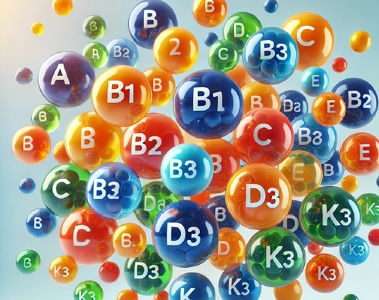
In the livestock industry, effective nutrition is essential for maintaining animal health and optimizing productivity. Dispersible Liquid Concentrates (DLCs), developed by dsm-firmenich, represent an innovative approach to delivering key nutrients, such as vitamins A, D3, and E, to cattle. These vitamins play crucial roles as metabolic cofactors, supporting essential functions such as immune response, growth, and reproductive health (Combs, 2007; McDowell, 2000). Studies have shown that vitamin supplementation significantly enhances antioxidant capacity and strengthens immune function in livestock (Mattioli et al., 2020). This article explores the advantages of DLCs over traditional dry vitamin forms, emphasizing their stability, bioavailability, and ease of incorporation into liquid feed systems.
What Are Dispersible Liquid Concentrates (DLCs)?
Dispersible Liquid Concentrates (DLCs) are colloidal dispersions designed to enhance the stability and bioavailability of fat-soluble vitamins by mixing them with food-grade emulsifiers and solvents. These formulations ensure even distribution and consistent nutrient delivery when integrated into liquid feed systems. DLCs are specifically designed to be miscible with thixotropic liquids, which are substances that behave as viscous gels under static conditions but flow when subjected to agitation or stress (Barnes, 1997).
To optimize the product's performance across various feed systems, the formulation includes several key agents:
- Polysorbate: Acts as a solubilizing and dispersing agent, ensuring uniform distribution of vitamins.
- Propylene Glycol: Lowers the freezing point of the mixture, preventing solidification in colder environments.
- Propionic acid: Is used for it’s antimicrobial properties.
The liquid form ensures superior dispersibility and suspension properties, leading to more consistent nutrient delivery across different feeding regimes. This innovation sets a new benchmark for vitamin delivery in animal feed applications.
Benefits of DLCs Over Dry Vitamin Forms
DLCs and dry vitamins differ significantly in their composition and application. For Vitamin A, DLCs utilize retinyl propionate and palmitate, providing a more stable product, while dry forms typically use retinyl acetate beadlets. In the case of Vitamin D3, although both forms utilize cholecalciferol, Rovimix DLCs offer a high-potency liquid variant that integrates seamlessly into liquid feeds. For Vitamin E, DLCs employ dl-alpha tocopheryl acetate, delivering a stable and bioavailable source comparable to dry forms.
- Stability and Shelf Life: DLCs offer enhanced stability compared to dry vitamin forms. DLC containing vitamin A has a recommended shelf life of 12 months, while all other DLCs are best used within 24 months. This stability is maintained even in challenging conditions, such as high temperatures and variable pH levels, making DLCs a robust choice for various feed systems. DLCs are formulated to resist oxidation and maintain potency, providing a more stable vitamin product than dry forms. This stability is achieved through ethoxyquin as a stabilizer, which protects the vitamins from degradation better than BHT. Research has demonstrated that Vitamin A and E maintain their potency in liquid dairy supplements over extended storage periods. For example, Vitamin E in DLC form showed minimal degradation when stored at 25°C and 37°C for 18 weeks, ensuring that dairy cattle receive consistent nutritional benefits from their supplements, which supports overall health and productivity.
- Improved Bioavailability: The submicron particle size of vitamins in DLCs ensures higher absorption in the animal's gastrointestinal tract. Studies have shown that the bioavailability of vitamins in DLCs is comparable to, or better than, that of dry forms, resulting in improved nutrient utilization by livestock (DLC vs. Dry Form Vitamin Bioavailability Study CSU, 2002 Dr. D. Johnson, H. Phetteplace).
- Consistent Delivery and Mixability: DLCs are easier to mix and disperse evenly in liquid feeds compared to dry vitamin sources, which may segregate and lead to inconsistent dosing.
- Adaptability to Environmental Conditions: DLCs do not freeze or become gel-like in cold weather, maintaining their free-flowing nature and ensuring consistent delivery across various environmental conditions. This adaptability makes them suitable for diverse geographical locations and feeding systems. Designed for stability across various conditions, DLCs remain intact at temperatures up to 120°F and a pH of 3 or higher. For optimal storage, maintain them at room temperature, avoiding excessive heat and prolonged freezing. If gelation occurs at low temperatures, warming the DLC to 100–110°F for 30 minutes to 1 hour will restore its fluidity without affecting vitamin potency.
Applications of DLCs in Cattle Feeding
DLCs are particularly effective in various feeding systems due to their versatility and ease of use. In micromachines, these automated systems dispense precise amounts of DLCs into feed rations, ensuring consistent nutrient delivery and reducing the risk of dosage errors. For free-choice liquid feeds, DLCs offer flexibility by allowing cattle to self-regulate nutrient intake, which is particularly advantageous in extensive feeding operations. Moreover, in concentrated liquid supplements, DLCs provide high-potency vitamins during critical growth or production phases, enhancing herd health and productivity.
Study Findings on DLC Effectiveness
A study comparing DLCs to dry vitamin forms in lambs demonstrated significantly higher serum retinol levels in the DLC group, indicating enhanced Vitamin A absorption. Lambs receiving the DLC diet exhibited serum retinol levels of 319 ng/ml, in contrast to 289 ng/ml observed in those fed dry vitamin forms. This increased bioavailability suggests that DLCs contribute to better growth performance and overall health in livestock, underlining their potential efficacy in enhancing nutritional strategies for cattle. (DLC vs. Dry Form Vitamin Bioavailability Study CSU, 2002 Dr. D. Johnson, H. Phetteplace).
Conclusion
Dispersible Liquid Concentrates (DLCs) are an advanced solution for delivering essential vitamins to cattle, offering significant advantages over traditional dry forms in terms of stability, bioavailability, and ease of use. Developed by dsm-firmenich, DLCs set a new standard for vitamin delivery systems in animal feed applications. Their robust nutrient delivery, compatibility with various feeding systems, and improved stability make DLCs an invaluable asset for modern ruminant nutrition. By utilizing DLCs, producers can enhance herd health and productivity, ultimately maximizing the efficiency of livestock operations.
References
Barnes, H. A. (1997). Thixotropy—a review. Journal of Non-Newtonian Fluid Mechanics, 70(1–2), 1–33. https://doi.org/10.1016/S0377-0257(97)00004-9
Combs, G. F. Jr. (2007). The vitamins (3rd ed.). New York, NY: Academic Press.
Mattioli, A. G., Diana, E. R., Esteban, T., Sebastián, J. P., Santiago, J. R., Antonio, H. H. M., & Luis, E. F. (2020). Effects of parenteral supplementation with minerals and vitamins on oxidative stress and humoral immune response of weaning calves. Animals, 10(8), 1298. https://doi.org/10.3390/ani10081298
McDowell, L. R. (2000). Vitamins in animal and human nutrition (2nd ed.). Ames, IA: Iowa State University Press.