What is heat stress?
Heat stress is a major challenge in poultry production causing suppressed performance and efficiency. Heat stress is the result of a negative balance between the net amount of energy leaving the bird’s body to its surrounding environment and the amount of heat energy produced by that bird. In other words, heat stress occurs when the bird’s core body temperature increases to the point that the bird’s standard coping mechanisms are no longer sufficient to maintain normal body temperature.
Birds will alter their physical behaviors in order to stay in their thermoneutral zone, which is defined as the temperature zone where the birds are able to keep their body temperature constant with the help of physical heat regulation. This temperature zone is dependent on a variety of factors including feeding level and housing conditions of the birds. The lowest temperature in the thermoneutral zone is called the lowest critical temperature. If temperatures fall to under this temperature the bird will start to use feed energy to maintain its body temperature and will consequently consume more feed. At the highest temperature of the thermoneutral zone is the highest critical temperature (HCT). If the temperatures rise above this threshold the birds can no longer dissipate their heat and they will start to consume less feed, thus causing a drop in production.
Birds utilize three methods to try and maintain body temperature within the Thermoneutral Zone; radiation, convection, and conduction. During radiation, heat will be lost from the body if the surrounding surfaces are below bird surface temperature. Conversely hot walls and roofs may radiate heat to the bird surfaces. Convection results from the natural rise of warm air from around a hot body, allowing the bird to cool its body temperature, thus providing moving air can assist convection. Lastly, conduction occurs when heat transfers from one surface in contact with another surface.
If a bird is no longer able to maintain its body temperature by one of these three methods, it must resort to evaporative heat loss. Poultry do not have the ability to sweat, instead they depend on panting for evaporative cooling. It is important to keep in mind that humidity plays a large role in the effectiveness of evaporative heat loss. Hot and humid conditions are much more stressful than hot dry conditions because in humid conditions, the heat is not able to be effectively transferred to the surrounding air.
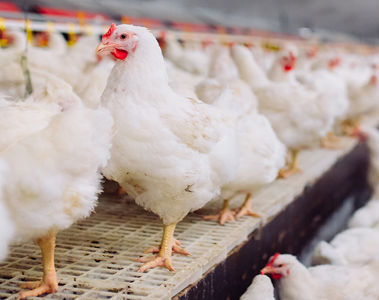
Birds will attempt to maintain their body temperatures in the thermoneutral zone by altering their normal behavior in a variety of ways including:
- Moving away from other birds.
- Moving against cooler surfaces, such as the block walls or into moving air streams.
- Lifting their wings away from their bodies to reduce insulation and expose any areas of skin that have no feathers.
- Resting to reduce heat generated by activity.
- Reducing feed intake.
- Increasing water consumption.
- Diverting blood from internal organs to the skin, which darkens skin color.
- Panting.
Feed and Water Additives Reduce the Impacts of Heat Stress Through Multiple Modes of Action
PoultryStar®, a synbiotic solution combining probiotics and prebiotic components, can play an important role in mitigating the negative effects of heat stress by supporting gut health and enhancing the bird’s resilience. A stable microbiome is closely linked to the integrity of the intestinal barrier, which is frequently compromised during heat stress. Elevated temperatures can disrupt tight junctions, leading to increased gut permeability (“leaky gut”) and translocation of endotoxins and potential pathogens into the bloodstream. In addition to local gut effects, the microbiome plays an important role in the gut-brain axis and regulation of the hypothalamic-pituitary-adrenal (HPA) axis, which governs the stress response. Heat stress activates the HPA axis, increasing corticosterone levels and diverting energy away from growth toward maintenance functions PoultryStar promotes populations of beneficial bacteria that produce metabolites such as short-chain fatty acids, which support epithelial health and strengthen barrier function. By maintaining microbial equilibrium, supplementation may help reduce pathogen pressure, lower intestinal inflammation, and preserve absorptive capacity during periods of stress.
Hy-D®, a 25-OH D3 metabolite, can also play a role in mitigating the effects of heat stress. As temperatures rise, feed intake is often reduced. Shell quality, bone strength, and performance can be hindered as a result. The addition of Hy-D can aid in calcium metabolism, reducing the impacts of lower feed intake. Hy-D has been shown to improve calcium mobilization when calcium intake is low, further improving shell quality and bone development during times of heat stress. As energy is re-allocated to maintain body temperature, body weight and ultimately meat yield may be reduced. Hy-D has been shown to improve meat yield by stimulating mTOR via vitamin D receptors in muscle tissue.
In practice, integrating products, like PoultryStar and Hy-D, into a comprehensive heat stress management program—alongside ventilation, water management, and nutritional strategies—can help producers reduce performance variability and maintain flock health. Both products are available in feed grade or water-soluble options.