
News
July 10, 2026
Large-scale farm data from 162 Dutch dairy farms and 20,000 cows confirms that Bovaer® reduces methane emissions by 30% without affecting milk production, animal health, or fertility. Developed by dsm-firmenich and backed by more than 110 peer-reviewed publications and 150 on-farm studies, Bovaer® was used in partnership with FrieslandCampina and Agrifirm in dairy herds across the Netherlands. The results were consistent across both phases of the validation: same milk, same herd health, same farm routine.
In July 2022, 162 Dutch dairy farms joined one of the largest real-world validations of a methane-reducing feed supplement ever conducted. The project translated more than 15 years of Bovaer® research into commercial farming conditions across the Netherlands.
The goal was to test Bovaer® across the full range of working Dutch dairy operations, from small family farms with fewer than 100 cows to larger herds of more than 1,000 cows. Farms were spread across the entire country, and participants were chosen in part for their openness to trying new farming practices. The pilot brought together FrieslandCampina, Agrifirm, and dsm-firmenich in a collaboration that was a European first: the first time a methane-reducing feed supplement had been tested at this scale under real working dairy conditions.
The 18-month window across two consecutive phases was chosen specifically to capture seasonal variation in milking performance, cover full reproduction cycles, and include the grazing season, where feeding dynamics may change with cows being allowed on pasture for periods of the day. Bovaer® was incorporated into the mineral mixes farms were already using. Feed advisors from Agrifirm visited each farm beforehand to explain how to use Bovaer® and what to expect.
| Monitoring setup | Key results |
| 18 months |
|
| 20,000 cows |
|
| Bovaer added in mineral mix vs control |
|
Across 162 farms and 18 months of real farm conditions, farms in the Bovaer® group recorded on average higher milk production than farms in the control group. The trend held consistently through the first phase and showed a positive trajectory in the second phase.

Milk yield (kg/day) July 2022 – December 2023, Bovaer® group vs. control. Source: Agrifirm/FrieslandCampina Report, April 2024.
Somatic cell count (SCC) is considered one of the most reliable indicators of herd health in dairy cattle: elevated cell counts signal infection or stress, and they are one of the parameters farmers and dairy processors watch most closely. Across both phases, the progression in somatic cell count was comparable between the Bovaer® group and the control group. In the first phase, the Bovaer® group showed a marginally higher count on average, attributed by the analysis team to pre-existing farm characteristics rather than any effect of the supplement. In the second phase, no difference in SCC was observed between the control and treatment farms.

Somatic cell count (x1,000 cells/mL) October 2022 – October 2023, Bovaer® group vs. control. Source: Agrifirm/FrieslandCampina Report, April 2024.
In terms of fertility, and when using a non-return rate at 56 days (NRR56, a standard measure of reproductive success), there was no significant difference between the two groups, with a value of 54.3% for the Bovaer® group against 54.6% for the control group in the first phase. In the second phase, the two groups recorded identical figures. Across both phases, Bovaer® showed no effects on production, health, or fertility, consistent with the body of peer-reviewed research behind the supplement. That finding carries practical weight: many of the farmers who participated in this validation have continued using Bovaer® for now over four years, without reporting any issues on herd health or milk quality.

Non-return rate at 56 days, control vs. Bovaer® group, Phase 1. Source: Agrifirm/FrieslandCampina Report, April 2024.
Behind every data point in this validation was a working farm and a farmer making daily decisions.
FrieslandCampina supports its member farmers in taking action on emissions through the Foqus planet sustainable development programme. Under this scheme, farmers receive financial premiums based on their results across climate, biodiversity, animal health, and pasture grazing. The highest bonus within the programme is paid specifically for greenhouse gas emission reductions, reaching up to €1.50 per 100 kg of milk. Farmers who use Bovaer® can register their methane reductions through the KringloopWijzer monitoring tool and receive recognition for their climate contribution within the supply chain. In addition, FrieslandCampina has established a development group in which farmers are paid for implementing new sustainability measures, including Bovaer®, financially supported by a number of customers. This kind of outcome-based incentive structure is what makes voluntary, durable adoption possible at scale.
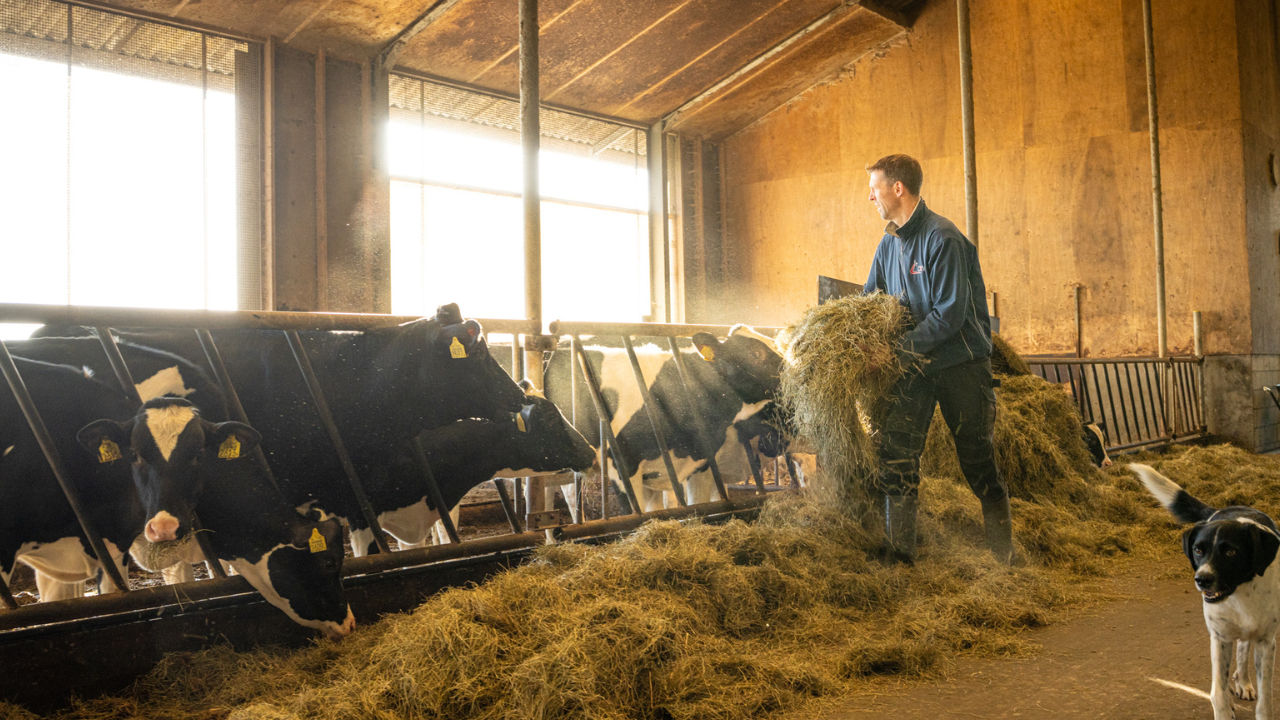
Jelle, whose experience is documented in this short video, manages a fourth-generation dairy farm in the Netherlands with around 400 cows, where sustainability runs through every part of how the farm operates.
"I participated in the Bovaer® pilot because I was curious whether the feed supplement would affect the fermentation process. I did not notice any effect as we added Bovaer® to the ration. We also did not observe any changes in the health of our cows or in their milk production and composition. It was an interesting experience in which I learned a lot about how Bovaer® works. I'm very positive that through our participation, we experienced a simple and safe way to further reduce our greenhouse gas emissions."
L1 Limburg, the regional broadcaster, captured what daily life with Bovaer® looked like across Dutch dairy farms as the pilot unfolded.

Dairy farmers have long been custodians of the land, caring for their animals, protecting nature, and adapting their practice across generations. Methane reduction is the next step in that same tradition. Bovaer® makes it practical: a small addition to a cow's diet that cuts methane emissions by 30%, without affecting milk, herd performance, or daily farm routines.
What the Netherlands validation showed, and what the experience of farmers like Jelle reinforces, is that durable adoption works best when it is voluntary, supported, and financially recognised. More than 80% of farms involved in the first phase continued into the second phase by choice, without any obligation to do so. Pairing Bovaer® use with sustainable premiums is one of the clearest examples of how that support structure works in practice. Dairy Reporter and FoodNavigator both covered the Netherlands pilot as a significant milestone in Bovaer®'s commercial rollout."
Today, more than 500,000 cows are fed Bovaer® across 25 countries. The evidence from 20,000 cows over 18 months is consistent: same milk, same herd health, same farm routine. Better for the climate.