

News
July 3, 2026
The use of Bovaer® contributed to more than 500,000 tonnes of CO₂e avoided emissions across dairy and beef cattle worldwide between 2022 and 2025. This impact is now featured in a case study published by the World Business Council for Sustainable Development (WBCSD) through its Avoided Emissions Implementation Hub, a platform showcasing real-world climate solutions and practical approaches to assessing their impact.
The case study positions Bovaer as an "eco-innovator": a company whose product drives measurable emissions reductions across the value chains it serves, not just within its own operations.
Avoided Emissions (AE) are the greenhouse gas emissions prevented by using low-carbon solutions instead of higher-emitting alternatives. For Bovaer, this refers to the reduction in methane emissions achieved when farmers use the supplement as part of their feeding practices. The WBCSD case study demonstrates how these impacts can be assessed using a transparent and structured methodology.
WBCSD's framework applies three eligibility gates to qualify a solution: climate action credibility, climate science alignment, and contribution legitimacy. This case study follows that methodology, using a representative German dairy farm as the reference scenario and considering the full lifecycle from production to farm gate.
Scientific studies have shown that Bovaer can reduce enteric methane emissions by approximately 30% in dairy cows and around 45% in beef cattle. Taking into account the limited emissions associated with producing and transporting Bovaer and depending on the production system, this translates into an estimated 9 to 15% reduction in the carbon footprint of dairy products.
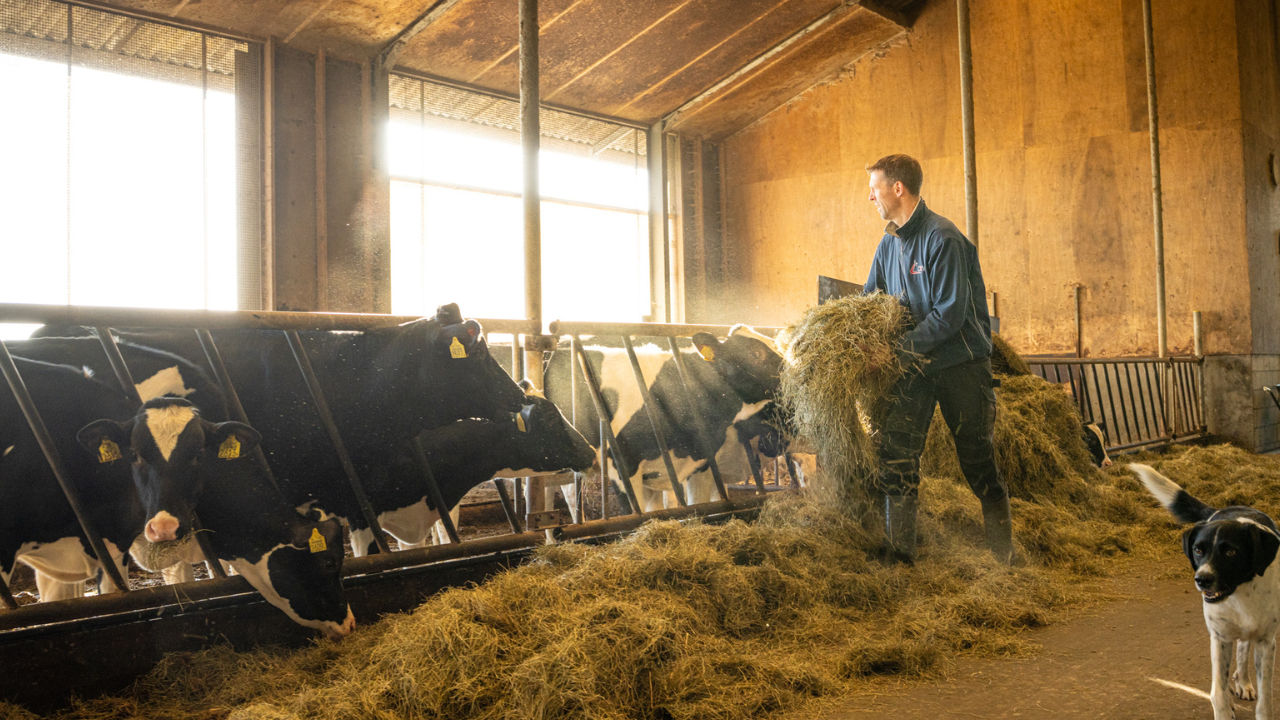
More than 500,000 cows and beef cattle are fed Bovaer every day, across more than 25 countries. It integrates directly into existing feeding routines, requires no changes to farm infrastructure, and is delivered through established feed supply chains.
For farmers, food companies and processors working to reduce Scope 3 emissions across the value chain, the WBCSD case study provides an independent framework for communicating the climate impact Bovaer delivers. By quantifying avoided emissions, companies can strengthen the business case for investments in climate-smart technologies and strengthen their profile as climate solution provider.
At dsm-firmenich, we have stood alongside the dairy and beef sector for decades, helping drive progress across the entire value chain. With Bovaer, we are deepening that commitment: offering one proven, responsible solution as part of the collective effort to lower their climate footprint.
The World Business Council for Sustainable Development is a global organisation of leading businesses working to accelerate the transition to a sustainable world. Its Avoided Emissions framework guides companies toward more reliable and harmonised sustainability accounting, with a use case repository co-developed with member companies to establish best practices for quantifying and disclosing the positive climate impact of real-world solutions. The framework was endorsed in the G7 Climate, Energy and Environment Ministers' statement in 2023. dsm-firmenich is a WBCSD member company.