

News
December 3, 2025
Explore how dsm-firmenich can help pharma raise the bar in patient-centricity and sustainability.

Patient-centricity and sustainability have been buzzwords in healthcare for years—but today, they’re no longer optional. They’re essential. Yet there are significant opportunities for the pharmaceutical industry to raise the bar in both areas. In this article, we explore how dsm-firmenich can support pharmaceutical companies across the lifecycle of a medicine—from overcoming drug delivery challenges and taste considerations in formulations to driving sustainability.
As new active ingredients enter the pharmaceutical landscape and as improving patient compliance becomes a question of how, not when, pharmaceutical companies face growing pressure to overcome both, new and long-standing formulation challenges. For instance, a promising active ingredient can fail to reach its full therapeutic potential, due to hurdles such as poor solubility and low oral bioavailability. Let’s take cannabidiol (CBD) as an example. While CBD shows significant promise in difficult-to-treat areas including pain, anxiety, and central nervous system disorders, it has low bioavailability in humans.1 This has limited the development of oral solid dosage forms, despite these delivery systems being more patient-friendly and convenient, compared to oil-based liquid dosage forms. With traditional oil-based drug products, large doses are required to confer the therapeutic effectiveness, leading to an unpleasant sensory experience for patients and possibly negative effect on compliance.
“To help innovators exploit the full potential of highly lipophilic molecules, like CBD, we’ve developed an innovative, patent-pending proprietary drug delivery technology called CBtru®,” explains Zdravka Misic, Associate Innovation Director Pharma, at dsm-firmenich. “At CPHI, we invited visitors to our booth to take a closer look inside our 3D model of the CBtru® particle, revealing that its core is filled with numerous oil droplets containing dissolved drug substance surrounded by an outer matrix. Because of this, it offers good chemical and physical stability in oral solid dosage forms, three-to-four times higher drug loading compared to oil-based solutions, and similar bioavailability compared to commercial oil-based products. What’s more, new human clinical research confirms that CBtru® is safe, well tolerated, and delivers optimized bioavailability—opening new possibilities for the development of CBD-based oral solid dosage forms.”
One of the key topics highlighted at CPHI Frankfurt was the advancement of sustained-release drug delivery systems designed to achieve near-linear release rates. This innovation is transformative for patients managing chronic conditions such as diabetes or epilepsy, where frequent dosing can be burdensome. At the event, visitors to the dsm-firmenich booth explored how TheraPEA™ helps optimize drug release timing, enabling therapies that reduce dosing frequency and improve treatment adherence.
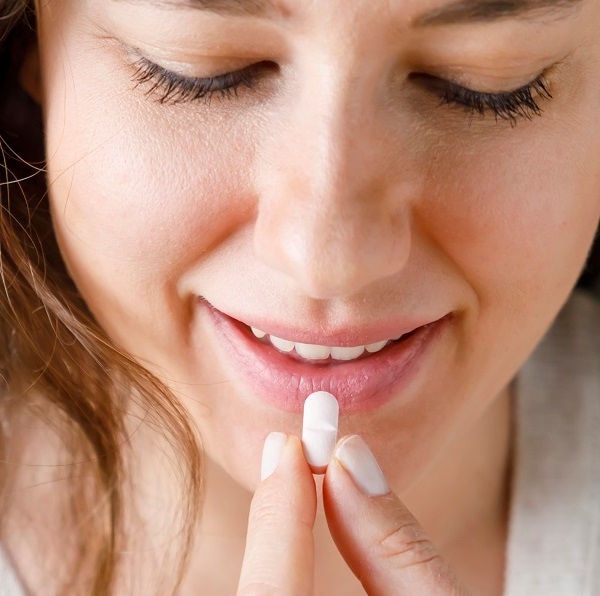
Optimizing drug delivery can only support patient-centricity to a point—but if a medicine leaves a bad taste, adherence can still suffer, particularly among pediatric and geriatric patients. Many active pharmaceutical ingredients (APIs) are inherently bitter, which can result in unpleasant-tasting medications that patients may be reluctant to take. Creating more palatable therapeutics therefore, represents a significant opportunity to improve adherence and overall treatment outcomes. However, this important aspect of medicine is often forgotten.
“Unpleasant tasting medicines have been overlooked for too long. But at dsm-firmenich, we’re changing that,” says Carlos Almasque, Global Marketing Director, Pharma Excipients, dsm-firmenich. “Instead of seeing bitterness as a challenge, we think it’s an opportunity to innovate and CPHI gave us the perfect platform to demonstrate how our innovative flavor tonalities and taste modulation solutions can help drug developers improve patient compliance. For instance, one visitor at our booth told us they were struggling to mask the bitterness of their drug. We showed them how our breakthrough taste modulation technology works at the receptor level to modulate a patient’s perception of taste—not just masking, but actually blocking bitterness at the source. We also told them why flavor profiles need to be taken into consideration during the earliest stages of the drug development process, to avoid costly reformulations and delayed market entry.”
When we talk about sustainability in pharma, environmental impact often takes the spotlight—think carbon footprints, recyclable packaging, and waste reduction. Yet true sustainable progress, as defined by the United Nations in 1987, is about meeting today’s needs without compromising the ability of future generations to meet theirs.2 In pharma, this means balancing environmental responsibility with social impact. By adopting environmental, social, and governance (ESG) principles, companies can better meet growing expectations from regulators, investors, and patients for more responsible corporate behavior that goes beyond just cutting emissions—while at the same time driving business performance and competitive advantage.
A survey carried out at CPHI reveals what’s holding the industry back from driving progress towards ESG principles. When asked about the biggest challenges their organization faces in achieving sustainability goals within the pharmaceutical supply chain, 51% see cost restraints as the biggest challenge, followed by regulatory compliance (36%), and raw material sourcing (34%).3 When asked whether or not their organization has set up emission reduction targets, 46% of respondents indicated that their companies have targets for Scope 1 emissions, with fewer having targets in place for Scope 2 (39%) and Scope 3 (36%).3 In contrast, around 25% of respondents reported that their organization had not set reduction targets for any of the three scopes.3
“Sustainability across the supply chain was a key theme at CPHI, with many different presentations, group discussions, and focus groups taking place throughout the event,” notes Charlotte Lonchay, Senior Director Global Sustainability, Health, Nutrition & Care. “We were keen to continue the sustainability conversation with visitors at our booth, showcasing how we can help them make measurable progress through Verilege™, a suite of sustainability, quality, regulatory, and supply chain expert services and superior customer care that supports our API portfolio.
With ISO 14040/44-compliant Life Cycle Assessments (LCAs), transparent data sharing—including primary data, SBTI validated sustainability targets—and certifications (EcoVadis), our Verilege™ sustainability services help customers achieve their sustainability goals, including Scope 3 targets. Furthermore, we have proprietary tools, like the Imp’Act Card™, which provides science-based metrics on the environmental footprint, traceability, and social impact at an ingredient level. But that’s not all. Verilege™ can help drug developers meet tightening quality and regulatory standards, and derisk their supply chain geographically through access to high-quality APIs via our global network of strategically located production facilities. This foundation is key to enabling sustainable growth and supporting expansion into new markets.
As the industry continues to evolve, advancing patient experience and sustainability will be key to unlocking better health outcomes. At dsm-firmenich, we’re committed to partnering with innovators to make medicines more effective, palatable, and environmentally responsible—today and for the future.
Ready to create more patient-centric, safe, and effective therapies? Whether you’re struggling with a formulation challenge or looking to improve patient compliance through better-tasting medicine, we’re here to support. Get in touch to find out how we can help you develop superior pharmaceutical products.
1. Perucca and Bialer. Critical aspects affecting cannabidiol oral bioavailability and metabolic elimination, and related clinical implications. Cannabinoids in Neurology and Psychiatry, 2020.
2. United Nations. Sustainability: https://www.un.org/en/academic-impact/sustainability
3. CPHI Sustainability Survey 2025.

17 June 2026
3 June 2026

2 June 2026
Customized blends of functional ingredients in one single, efficient premix.
Streamline your product development process and get to market faster.
From trade shows to conferences and other industry events, find out where you can meet us next.
Talking Nutrition, Health & Care
Explore new science, consumer insights, industry news and more in our latest articles.
Discover educational whitepapers, webinars, publications and technical information.
Request samples, place orders and view product documentation.