

News
December 3, 2025
Learn why medical nutrition products face compliance challenges and how innovative formats can improve adherence based on real-world insights.
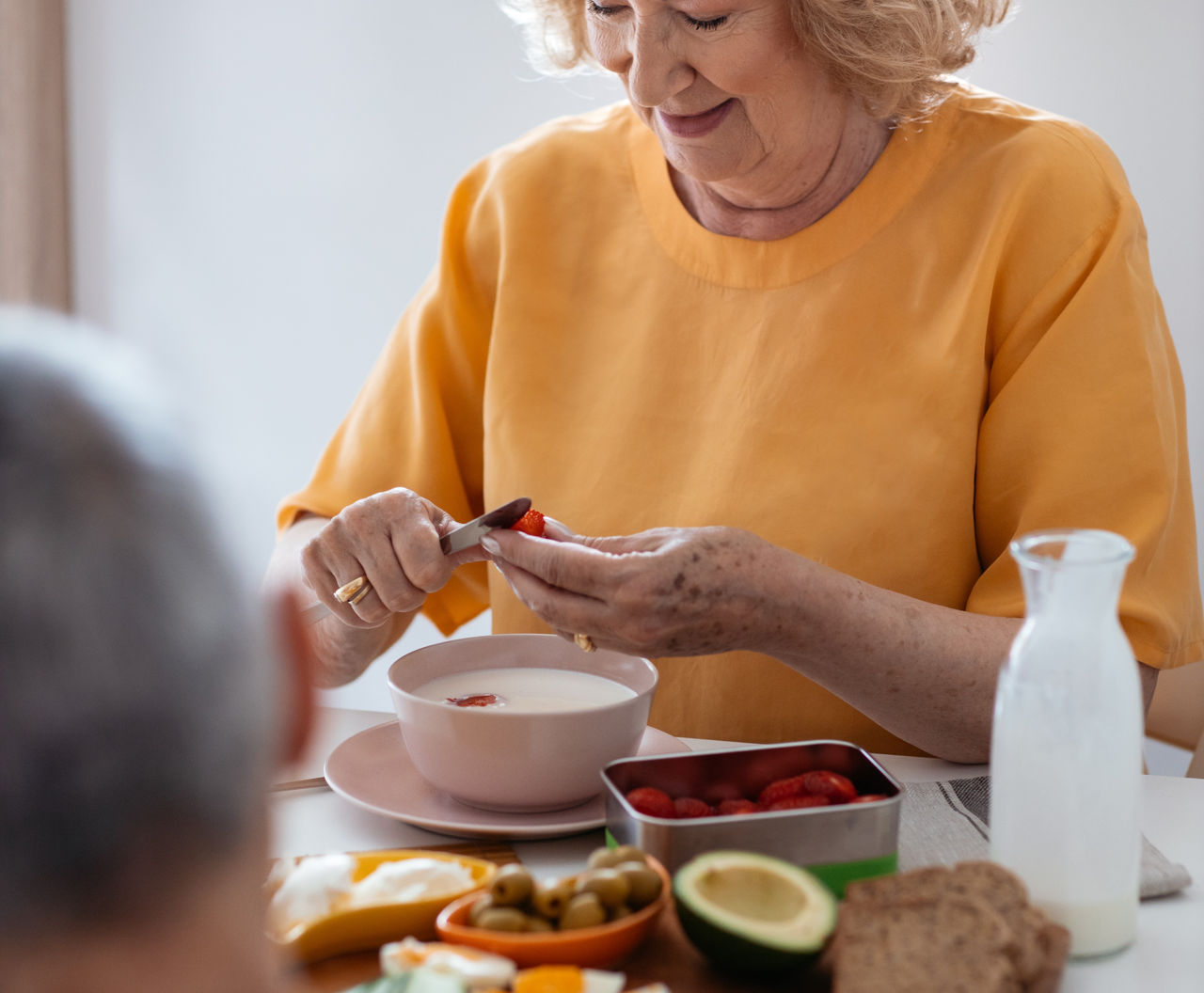
Medical nutrition products do so much more than just preserve health and assist recovery—they are a key modifiable factor that help individuals living with health conditions and those navigating age-related changes to live life as fully as possible. Yet, specialty nutrition formats, specifically oral nutritional supplements (ONS), can face adherence challenges that limit their effectiveness. To explore these compliance barriers and create solutions tailored to real-life needs, we’ve listened to the perspectives of individuals using ONS, as well as their carers, and families.
Our qualitative study across care homes in the UK, Germany, and France reminds us that behind every supplement is a person with preferences, routines, and emotions that shape how (and whether) they adhere to ONS. Let’s take one of the residents’ stories as an example. Meet Fred—a retired engineer who found as much joy in the laughter and conversation during mealtimes as the food itself. But after moving into a care home and being prescribed ONS, Fred’s daily routine changed. Although the shakes supported his recovery, Fred found that adding them into his routine sometimes shifted his focus away from the mealtimes he loved—and the social connection that came with them.
Fred’s experience isn’t unique. Keep reading to explore more human truths around ONS and see how advancements in this space—from novel formats that support a food-first approach to ingredient innovations—can help create more appealing ONS that improve not only adherence, but quality of life.
Studies show that adherence to ONS prescription can vary widely and can be as low as 37%, reflecting the complexity of real-world use.1 The reasons for this low and variable compliance are multifaceted, going far beyond the quantity, duration, and frequency of ONS intake. For instance, external factors, like healthcare staff guidance, social dynamics, and family support during consumption are all part of the bigger compliance picture.2 Similarly, personal factors, which refers to an individual’s attitude, desires, and consumption preferences also have a role to play.2 For Fred, adherence wasn’t about forgetting to take his supplements—it was about how they made him feel. In his case, the volume and timing of his shakes sometimes meant he felt too full to enjoy meals in the way he used to. His carer told us, “Lately, he’s been joining the dining room less often, and we miss seeing him connect with the other residents.”
As Fred’s story highlights, the barriers to adherence don’t stop at the product itself—like its taste, texture, and format—but also the emotional and social impact of taking ONS plays a critical role in whether someone continues to use it.
One of the key factors influencing adherence is the sensory experience of an ONS.2 Simply put, if the product’s taste, smell, or mouthfeel doesn’t appeal, people are less likely to stick with it. Taste is particularly important, as poor or unbalanced flavors, off-notes, and unpleasant aftertastes are commonly linked to low compliance. Aromas also impact the sensory experience of ONS, which have been associated with having ‘medicinal’ or ‘synthetic’ smells according to some dieticians.3 Texture and mouthfeel are equally critical. Factors such as thickness, creaminess, and mouth-drying sensations can discourage consumption. Addressing mouth-drying effects, perhaps caused by ingredients like dairy proteins, is therefore essential to improving the overall ONS experience. The size of ONS matters too. Supplements with a smaller volume and higher calorie content can promote better adherence compared to higher volume formats.4
A carer from our survey told us: “Some of our residents find larger volumes challenging to finish—smaller portions would make life much easier for them.” Another carer also revealed that some of their elderly residents are fearful of drinking too much in the evening, because they are afraid of falling when going to the bathroom during the night. In this context, it’s clear that large and inconvenient ONS can make life harder (not better) for some individuals, and this was certainly true for Fred. Our care home study also revealed that the aesthetics of an ONS format can impact adherence. Senior adults can often feel like they are being treated like children when they are given ONS in childlike formats, such as with straws or in purees. This can be humiliating for individuals that above all want to maintain their dignity.
Stories like Fred’s highlight why we need formats that work with, not against, people’s lives and fit seamlessly into daily routines and mealtimes to maintain social connection. To meet this need, we’ve created a unique ONS format that makes protein intake truly enjoyable and convenient. Mix-in protein granules powered by Sprinkle It Technology™ (SIT™) is a patent-pending format with a high protein density and small volume that can be simply mixed into snacks or regular meals. Thanks to this flexibility, Mix-in protein granules encourage a food-first approach, allowing individuals to keep enjoying the meals they love while getting the protein they need in a way that suits them best.
To find out what older adults think of this format, we investigated its appeal in an elderly care home. Residents were given the Mix-in granules—containing protein along with vitamins D, E, and K, copper, iodine, selenium, and zinc—mixed into their regular food. One of the residents revealed: “I think this could be used by anyone, it is so easy to eat, and the granules have no taste at all.” To explore the experience from a culinary perspective, we also requested the feedback from a chef: “The taste is super neutral which makes it very versatile. I found that you can also add the granules to a meal and then soften them in the fridge for two hours, which helps to add flavor to them—again, demonstrating their adaptability.”
There is still so much room for innovation in the medical nutrition space, especially when it comes to making ONS more enjoyable and convenient to take. Advances in understanding the mechanisms behind mouth-drying sensations may provide additional opportunities to reduce this key barrier to ONS adherence for instance. Whereas, another promising area of R&D is aroma. Ortho-nasal aroma perception shapes a person’s first impression of an ONS product, influencing appetite and expectation even before the first sip. Optimizing scent profiles can therefore help medical nutrition manufacturers create products that are more inviting and palatable.
Ingredient advancements also hold exciting potential in this market. Let’s take omega-3s as an example. Beyond their well-known role in supporting heart and brain health, emerging research suggests they may help improve cognitive function in older adults and even reduce the risk of Alzheimer’s disease.4,5 With our latest solution—life’s®OMEGA O3020—a unique non-animal source of omega-3 with an eicosapentaenoic acid (EPA)-to-docosahexaenoic acid (DHA) ratio similar to standard fish oil, manufacturers can achieve the same benefits at a lower volume. What’s more, we’re also leveraging our industry-leading taste and sensory expertise to help reduce unpleasant marine notes in omega-3 applications. Together, these advancements support efforts to improve acceptability, reduce dosage burden, and ultimately support compliance in medical nutrition products.
At dsm-firmenich, we believe that improving adherence starts with empathy and care. By designing nutritional solutions that honor people’s habits, dignity, and sensory preferences, we can help them rediscover the joy of eating—and ultimately, a better quality of life. Our findings reinforce that the future of medical nutrition lies in solutions that are convenient, pleasant, and aligned with real daily routines. Approaches that allow individuals to integrate nutrition into the foods they already enjoy—supporting a food-first mindset—can make ONS feel more familiar and less disruptive. Innovations that offer smaller volumes, flexible formats, and an optimized sensory experience, including taste, texture and aroma, are set to redefine the future of medical nutrition product development.
1. Hubbard, Gary P., Marinos Elia, Anne Holdoway, and Rebecca J. Stratton. "A systematic review of compliance to oral nutritional supplements." Clinical nutrition 31, no. 3 (2012): 293-312.
2. Lester, S., M. Kleijn, L. Cornacchia, L. Hewson, M. A. Taylor, and Ian Fisk. "Factors affecting adherence, intake, and perceived palatability of oral nutritional supplements: a literature review." The journal of nutrition, health & aging 26, no. 7 (2022): 663-674.
3. Lad H, Gott M, Gariballa S. Elderly patients compliance and elderly patients and health professional’s, views, and attitudes towards prescribed sip-feed supplements. The journal of nutrition, health & aging. 2005;9(5):310-4
4. Bigornia SJ et al. Prospective associations of erythrocyte composition and dietary intake of n-3 and n-6 PUFA with measures of cognitive function. Nutrients, vol. 10, no. 9, E1253, 2018.
5. Yassine H et al. Literature-based association of docosahexaenoic acid supplementation with Alzheimer’s Disease stage in apolipoprotein E e4 carriers: a review. JAMA Neurology, vol. 74, no. 3, pg. 339-347, 2017
26 August 2026

21 August 2026

3 October 2025
Customized blends of functional ingredients in one single, efficient premix.
Streamline your product development process and get to market faster.
From trade shows to conferences and other industry events, find out where you can meet us next.
Talking Nutrition, Health & Care
Explore new science, consumer insights, industry news and more in our latest articles.
Discover educational whitepapers, webinars, publications and technical information.
Request samples, place orders and view product documentation.